


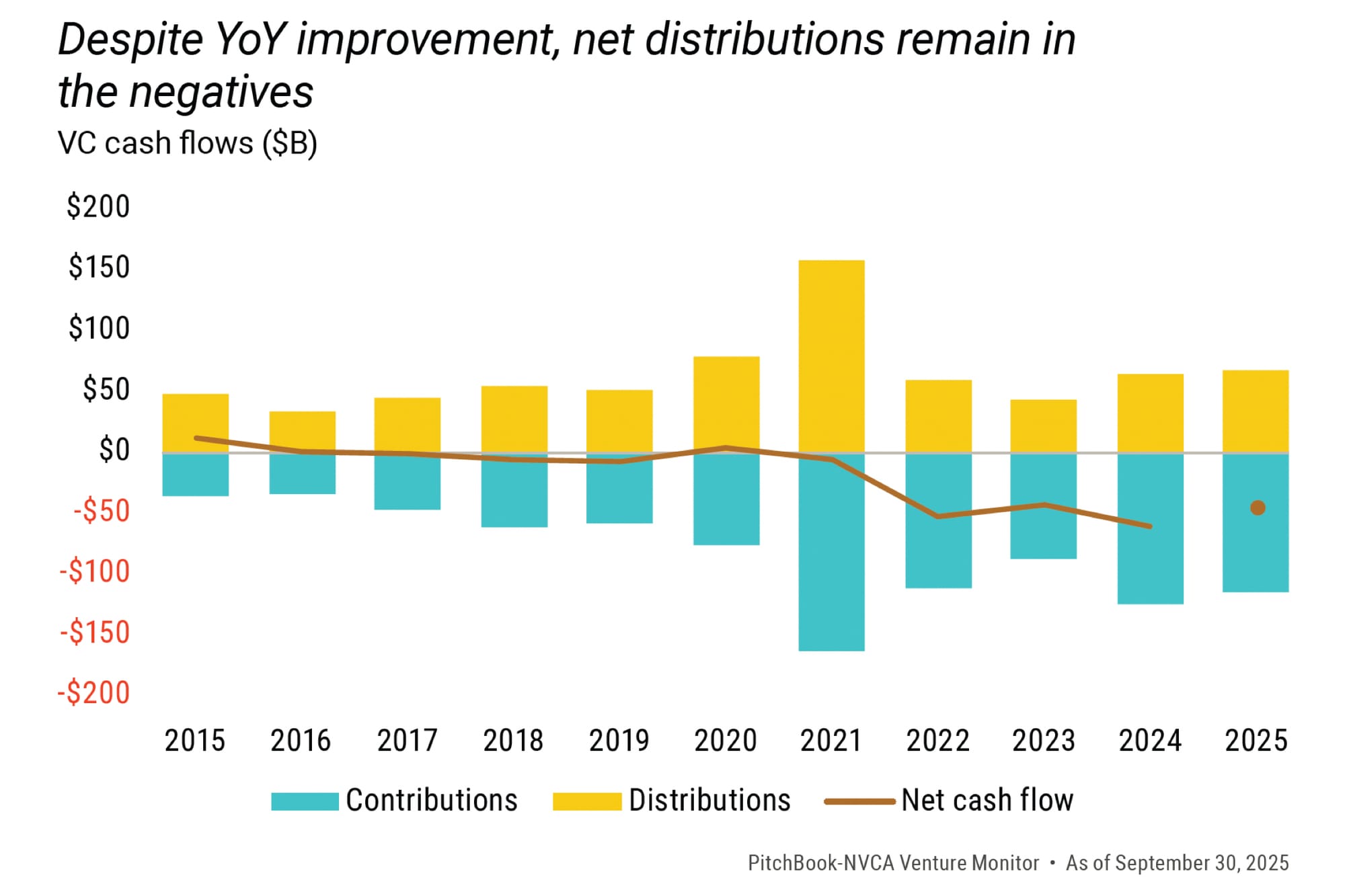
Net distributions from venture capital to its investors have been negative for years.
You look at that chart below and think it's somebody else's problem. IPO market, late-stage, Tiger Global — none of it touches the check you're about to raise, or the check you'll need after it.
You're wrong. It affects every founder.
Here is the cause. 44.6% of today's unicorns raised their first VC round in 2016 or earlier. They are sitting on $5.8 trillion in paper valuations and returning almost nothing to their LPs.
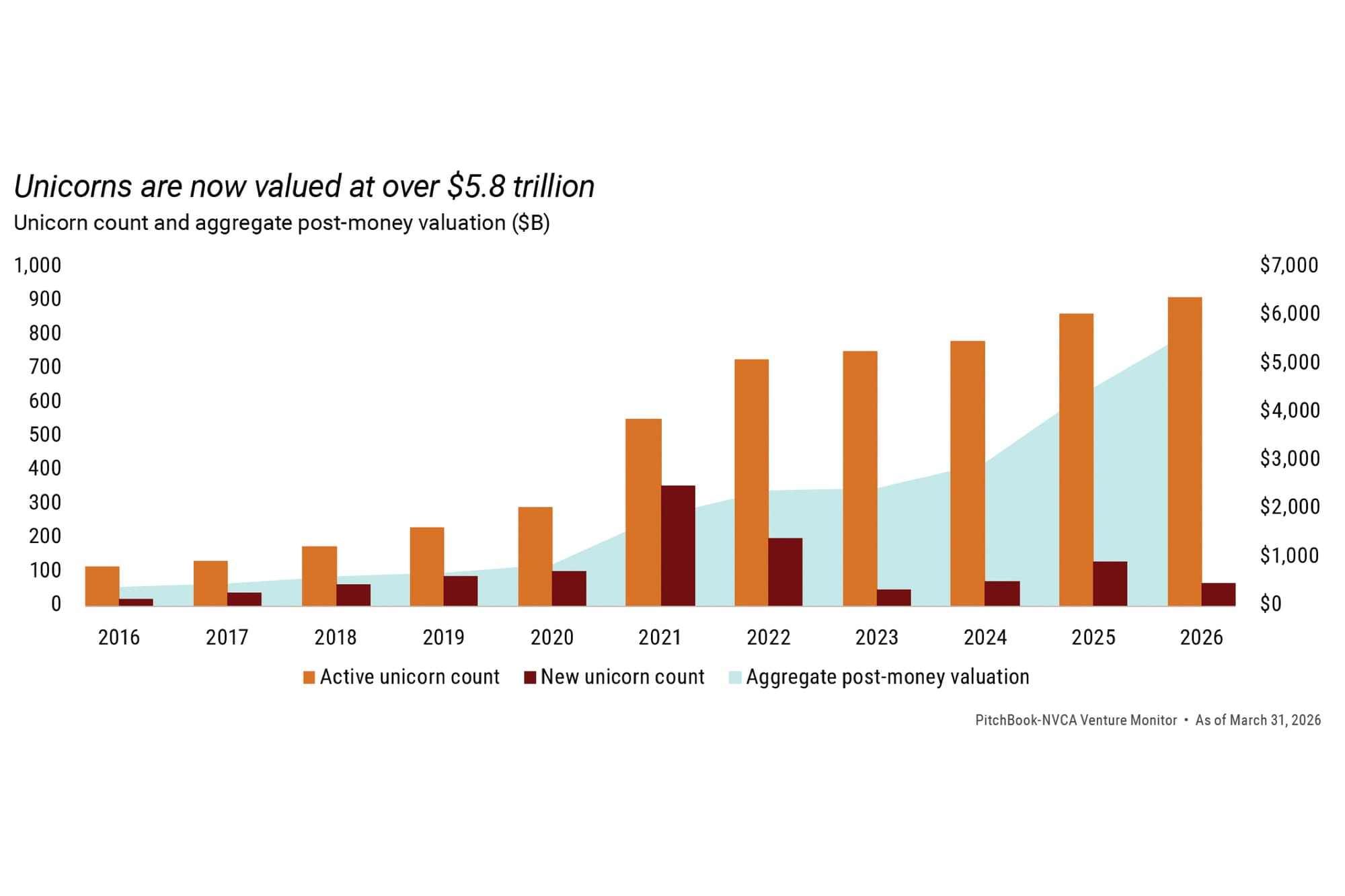
That is $5.8 trillion of trapped capital. None of it is coming back to the LPs funding your next check.
You aren't just raising from a fund. You are raising from a fund whose LPs have been cash-flow negative for years.
The bridge when you miss a milestone. The follow-on when your next lead asks for insider support. The pro-rata defense when the new round squeezes you. Each one requires your investor to write a check.
If their LPs are tapped out, that check doesn't exist.
How does your investor struggling to raise Fund IV affect the Fund III check that's already on your cap table?
First, committed capital and called capital aren't the same thing. Funds draw from LPs in tranches, over years, not up front. A GP struggling to raise their new fund has an incentive not to call additional capital for older funds. This decision preserves LP goodwill and liquidity for the new fund, but it reduces reserves for follow-on investments.
Second, in a market desperate for liquidity, funds are rationing. Capital flows to startups bridging to a near-term exit. If you're still building for long-term enterprise value, you may not make the cut.
Third, there's the signaling. A GP who won't lead your bridge just told the market they don't believe in you. That kills the next round before it starts.
You are not managing one runway. You are managing two — yours and your investor's. And nobody told you about the second one.
👉 Reverse-diligence your lead investor's liquidity. Before you take a term sheet, ask the hard questions: Where are you in your deployment cycle? What is your reserve strategy for follow-on checks? Are your LPs fully called? A fund running on fumes cannot defend you in eighteen months.
👉 Assume the bridge round is dead. The old safety net — a friendly insider extension when you narrowly missed the milestone — is gone. Structure your runway so your current cash carries you all the way to an external, market-validated milestone. If you fall short, assume your cap table cannot bail you out.
👉 Pitch your path around the unicorn trap. Early-stage VCs are terrified of getting stuck in another 10-year illiquid asset. Show them a capital-efficient path to a $100M–$300M M&A exit. Show them how they get their money back without needing the IPO window to thaw.
Control your startup's destiny.


